


Experiential Learning
The Vote in the Machine: On Staffing an OC Vote Center
by James Yamada
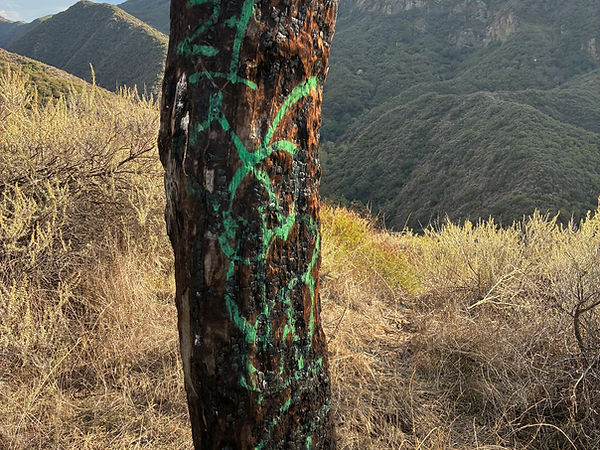
Four days before the election, I wound my way up Santiago Canyon Road, headlights cutting through thick morning fog. The roadside blurred past in the familiar Orange County palette of dusty greens and browns. Though I’d lived just down the hill for twenty years, I’d never been up here, to this small community separated from the suburbs below by miles of switchbacks—isolated, but still a cog in the vast machine of our democracy.
I’d seen the machinery up close before. Last year I worked closer to home in Tustin, watching the gears turn from the inside, scanners and procedures ingesting the will of the people. One woman proudly told me she was only there to vote for one man, ignoring the rest of the ballot. Parents snapped pictures of their kids voting for the first time at 18, an age when I still saw the world divided cleanly into right and wrong. Several Latino voters frowned at the D on their voter registration and asked to switch to R, a quiet foreshadowing of the outcome.
As a political observer, this was a valuable experience, so I signed up again for the 2025 special election. Unexpectedly, the Registrar of Voters assigned me to a polling location far from my home: The Library of the Canyons in Silverado.
I parked in the library’s small lot and walked up a winding ramp lined with sage and buckwheat. I met my colleagues in the big multipurpose room: mostly retirees, some local to the Canyons. These locals moved and spoke slowly, with quiet confidence, a pace and demeanor that would color the days ahead. Together we unwrapped and unfurled the democratic machine piece by piece before trickling home to rest. Four long days of printing, scanning, and counting lay ahead.
The next morning we opened the polls. A slow first day: 18 votes in 12 hours, leading to jokes about holding down the fort against a nonexistent onslaught. We broke long silences—of reading and phone scrolling—to clarify procedures or chatter about careers past. Then we closed up. The next few days repeated similarly. Other vote centers reported long lines on Election Day. Not for us. Not in the Canyons.
This is democracy. A self-assembling structure that every year or two compresses the sprawling will of the people into binary choices: yes/no, red/blue. Out of this sprouts the labyrinth we call the US government.
Voters hope to positively affect the labyrinth, yet many end up disappointed. They vote yes for more X, but they get less X in the long run, or more X unexpectedly decreases Y, or their candidate doesn’t follow through. Between intention and outcome lie so many feedback loops and bureaucratic gears that even experts can’t trace cause to effect. Ordinary citizens like me have no chance.
Our particular voters trickled in, a mix of outdoorsmen in Bass Pro Shops hats, ranchers in cowboy boots, Norbertine priests in white vestments, and families whose children happily dug into our leftover Halloween candy. Many insisted on showing their driver’s licenses. Some professed a distrust of mail-in voting, refusing to drop the mail-in ballots under their arms into the secure ballot box a few feet away. We politely checked in everyone, sending them to voting booths with freshly printed ballots in hand.
All of this for Prop 50. A measure meant to skew representation to counter skew elsewhere. Output becomes input. The labyrinth chases its own tail. A voter at Silverado Cafe recognized me and with an ironic smile called the special election a waste. But maybe it was worse than a waste—duct tape on a rattling gear, quieting it just enough to renew faith in the machine. Who knows what will happen down the line? Not me, though I try hard to understand these things.
“I voted!” say the stickers we handed out to many voters after they scanned their ballots. Democracy demands participation as proof of legitimacy, so the stickers celebrate the act of voting, not the act of comprehending the increasingly incomprehensible labyrinth. The sticker means you’ve done your part, whether or not you knew what your part was. “Thanks for voting!” we election workers said.
And yet everyone is just doing their best. The voters were all lovely, smiling politely even if they thought we should require voter ID, hopeful despite the state of things. They yearn for a better nation, a better future, dreaming that their mark on a ballot can still lift the world. But the reality falls far short of the dream: voters flatten all that yearning into binary choices, slapping the sticker on their chest, proud of their tiny turn of a gear in the unfathomable machine. We call it the worst system except for all the others, almost as a prayer.
After Election Day, we packed up all the equipment and parted ways. I drove down out of the canyons as, nationwide, the machine coiled up to slumber. Next year we’ll wind it back up, feed it our heartfelt incomprehensions, and thank you, once more, for turning the crank.

James Yamada writes about purpose, perspectival scale, and the long-term future of humanity. His fiction has appeared in Dunce Codex and Telephone (Big Table Press), and his nonfiction in This Year and on his Substack, Heat Death and Taxes. He holds an MFA in creative writing from UC Irvine and previously worked in engineering and physics.